 MHQ Hoodies

If you’re considering starting your own hoodie business, choosing the right fabric for your hoodies is crucial. The fabric not only affects wearing comfort, but also impacts warmth, durability, style expression, and even directly determines customers’ willingness to pay. Among various fabrics, fleece and French terry are two popular choices, yet they are often confused. At first glance, both have a soft touch and a casual style, but their fabric characteristics are distinctly different, suitable for different seasons, climates, and wearing scenarios.
In this guide, we will comprehensively analyze the various characteristics of fleece fabric and French terry fabric – from texture and warmth to style, weight, cost, and even B2B procurement considerations. After reading, you will be able to confidently choose the most suitable fabric for your hoodie series, whether it is streetwear, sportswear, loungewear, or a fashionable item for cold weather.
What Is Fleece Fabric?
Fleece is a knitted fabric that achieves a soft and fluffy surface through a single-sided or double-sided pile-raising process. The pile-raising process causes the fibers to stand up, giving the fabric a fluffy and comfortable feel, which makes the hoodie more warm. When you wear a fleece hoodie on a cold autumn or winter morning, the effect is immediate – it provides warmth without any heaviness, and the softness of the fabric brings an excellent comfortable experience.
The weight of most fleece hoodies ranges from 300-500GSM, which directly affects their warmth and thickness. Lighter fleece fabrics (around 300-380GSM) are suitable for early winter or cool autumn days. However, heavy fleece fabrics with a weight of over 380GSM per square meter can be made into thick hoodies suitable for severe cold climates, such as the northern United States, Canada, or Northern Europe.

380GSM Fleece CVC Hoodie Fabric
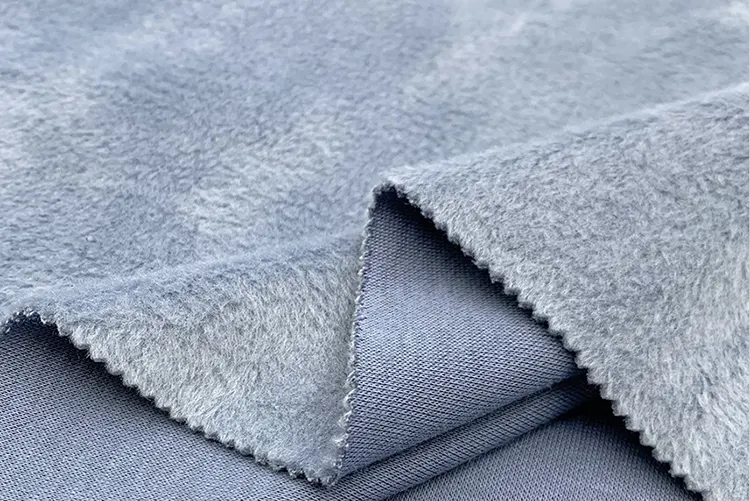
280/330/360 GSM Fleece TC Fabric
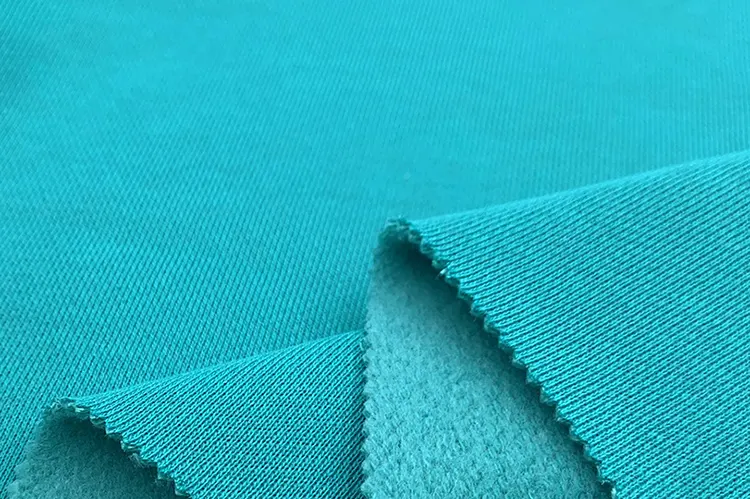
460G Trendy Heavy Fleece Sweatshirt/hoodie Fabric
Common Fleece Hoodie Fabric Specifications:
| Name | Composition | Width | Weight | Yield | Stretch | Thickness |
|---|---|---|---|---|---|---|
| 280G New 5050 Fleece Sweatshirt/hoodie Fabric | 50% Cotton 50% Polyester | 185cm | 280g/㎡ | 1kg ≈ 1.9m | None | Medium |
| 40S Cotton Brushed Fleece 280/330/360G | 30% Cotton 70% Polyester (3% Spandex) | 165cm | 280/330/360g/㎡ | 1kg ≈ 2.2/1.8/1.7m | Stretch | Medium |
| Modal Cotton Double Fleece Sweatshirt/hoodis (with 1*1 Rib) | 85% Cotton 15% Polyester | 175cm | 380g/㎡ | 1kg ≈ 1.5m | None | Thick |
| 460G Trendy Heavy Fleece Sweatshirt/hoodie Fabric | 100% Cotton | 190cm | 460g/㎡ | 1kg ≈ 11m | None | Thick |
There is a wide variety of fleece fabrics. Pure cotton fleece feels naturally soft and skin-friendly, while cotton-polyester blended fabric is more durable and less prone to shrinkage. Polar fleece has a thicker and fluffier texture, often used as an inner lining for hoodies or to make extremely warm outerwear. Brushed fleece is the standard fabric for most hoodies, combining softness, warmth, and affordability.
Apart from their warmth, fleece hoodies also offer practical benefits. They typically retain their shape over time, are easy to layer, and have a smooth surface suitable for embroidery or simple screen printing. For these reasons, fleece fabric often becomes the first choice for brands launching winter collections or home wear for cold weather.
What Is French Terry Fabric?
French terry fabric is a knitted fabric with a looped structure on the inside and a smooth, flat surface on the outside. Unlike brushed fabric, it has not undergone brushing treatment, making it lighter and more breathable. The looped structure on the inside provides a soft touch without adding excessive thickness, making it an ideal fabric for mild climates and sportswear.
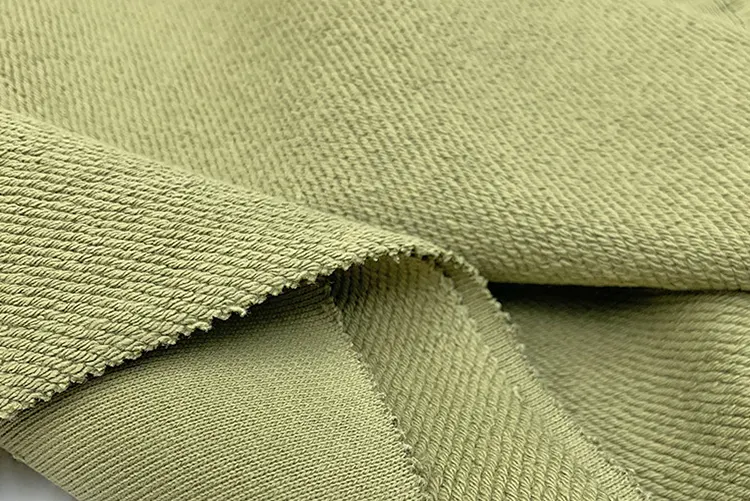
580/650 GSM French Terry Fabric
The fabric of French terry hoodies typically ranges from 240-340GSM per square meter. The lightweight version, about 240-280GSM per square meter, is suitable for spring and summer, while the thicker version, close to 340GSM per square meter, is ideal for medium-thickness wear in autumn. French terry can be made of 100% cotton, providing a soft and premium touch; it can also be blended with spandex to enhance the elasticity of sports-style hoodies. Cotton-polyester blended fabric is also common, characterized by durability, low shrinkage rate, and good color fastness after multiple washes.
The unique structure of French terry fabric endows it with excellent breathability. Unlike fleece, it does not trap heat, making it particularly suitable for indoor wear, fitness training, or transitional season hoodies. French terry hoodies usually have a more natural draping effect, maintaining a simple and sleek appearance, which is suitable for both casual and mid-to-high-end brands.
Common French Terry Fabric Specifications:
| Name | Composition | Width | Weight | Yield | Stretch | Thickness |
|---|---|---|---|---|---|---|
| 250G Cotton Sweatshirt Fabric | 70% Cotton 30% Polyester | 185cm | 250g/㎡ | 1kg ≈ 2.1m | None | Medium |
| 190/220/240G Combed Cotton Hoodie Fabric | 100% Cotton | 185cm | 190/220/240g/㎡ | 1kg ≈ 2.8/2.5/2.3m | None | Medium |
| 360G Thick Modal Double-Yarn Hoodie Fabric (Peached) | 100% Cotton | 185cm | 360g/㎡ | 1kg ≈ 1.5m | None | Medium |
| 580/650G Heavyweight Streetwear Hoodie Fabric (with 1×1 Rib) | 100% Cotton | 185/180cm | 580/650g/㎡ | 1kg ≈ 0.95/0.85m | None | Thick |
| 500G Streetwear Heavy Hoodie Fabric | 100% Cotton | 190cm | 500g/㎡ | 1kg ≈ 1m | None | Thick |
| 650G Streetwear Heavy Hoodie Fabric (with 1×1 Rib) | 100% Cotton | 180cm | 650g/㎡ | 1kg ≈ 0.85m | None | Thick |
Comparing Fleece and French Terry
When choosing between fleece fabric and French terry fabric, multiple factors need to be considered: warmth, breathability, texture, durability, style, and price.
Warmth is usually the primary consideration. Fleece fabric has obvious advantages in this regard. Its brushed fibers can trap air and retain heat, making it an ideal choice for cold weather. French terry fabric, on the other hand, is lighter and more breathable, effectively preventing overheating during mild weather or exercise.
Comfort and texture vary as well. Fleece hoodies feel fluffy and soft, making them suitable for both outdoor layering and casual home wear. French terry fabric boasts a smooth outer layer and a looped inner side, offering a soft and natural feel without feeling heavy. There are also differences in durability: French terry fabric is durable and resistant to deformation, while fleece fabric may lose some of its fluffy texture after repeated washing and frequent use.
Style is another important consideration. Fleece hoodies typically feature traditional casual designs, emphasizing comfort; whereas French terry hoodies have a more streamlined and modern silhouette, often adopted by high-end brands or sportswear brands. Fabric weight is closely related to seasonality: fleece fabric is thicker and more suitable for autumn and winter wear; French terry fabric, on the other hand, is lightweight and ideal for spring and summer as well as indoor environments.
Price is a consideration for many brands. Due to its simpler production process, fleece fabric typically has a slightly lower price; whereas high-quality French terry fabric, especially cotton-polyurethane blended or premium cotton fabric, may be priced higher.
Choose the right fabric for different usage scenarios
Choosing the right hoodie fabric mainly depends on its intended use. For everyday casual wear, fleece fabric provides warmth and comfort in cold climates, while French terry fabric is suitable for milder weather. Streetwear or thick hoodies often prefer fleece fabric due to its thick texture and comfortable characteristics; however, if you are looking for a lightweight yet sophisticated look, French terry fabric can also create a stylish and crisp alternative.
Sports hoodies benefit from the breathability of French terry fabric. Its looped structure allows sweat to evaporate quickly, preventing overheating during exercise. In the casual wear sector, fleece fabric has always been favored for its fluffy and soft feel, as well as its warmth-retaining properties. Hoodies for cold climates, especially those targeted at markets such as North America or Northern Europe, often use fleece material, which provides an unparalleled insulation effect compared to French terry fabric at the same weight.