 MHQ Hoodies

Why GSM Matters for Hoodie Brands
For hoodie brands, GSM isn’t merely a technical term—it’s a critical factor directly impacting product experience, costs, and brand positioning.
GSM determines fabric thickness, drape, warmth, and handfeel, while also influencing raw material costs and shipping expenses. For startup brands, selecting the wrong GSM often leads to: imbalanced pricing strategies (e.g., high costs preventing sale at target prices), increased return rates (customer expectations mismatching the actual product), or losing competitiveness within the intended target audience (e.g., positioning as high-end streetwear while using lightweight fabrics). Therefore, brand founders should prioritize GSM as a critical decision factor alongside design, positioning, and supply chain costs during early product development.

What is GSM, and How Does It Affect Hoodie Quality
GSM (grams per square metre) is an internationally recognized metric for measuring the weight of fabric per unit area. Higher values typically indicate thicker, denser fabric, though this isn’t absolute. Key factors influencing wearability also include fiber composition (e.g., pure cotton, blends, recycled fibers), yarn count, weave type (knitted, looped/warp-knitted), napping/brushing techniques, and finishing processes (pre-shrinking, softening agents). The actual feel corresponding to GSM includes:
Warmth: Within the same material, higher GSM generally provides better warmth, though weave variations (like long-pile vs. short-pile) alter thermal resistance.
Touch and drape: Brushed fabrics with medium-to-high GSM often feel thicker and more substantial, offering a “hugging” sensation; lightweight French Terry is softer and more form-fitting.
Durability: At equivalent fiber and yarn counts, higher GSM fabrics are generally more abrasion-resistant, though fabric density and yarn thickness also significantly impact longevity.
Cost and logistics: Higher GSM means greater raw material consumption, increasing per-unit fabric cost and shipping weight, which impacts net profit margins.
Garment sewing and construction: High-GSM fabrics demand stricter sewing requirements, necessitating adjustments to stitching, stitch length, and presser foot settings. This may elevate production complexity and defect rates.
Hoodie GSM Classification (Light / Mid / Heavy / Ultra-Heavy)
Below are common GSM classifications and their primary characteristics:
| GSM Range | Market Positioning | Key Features | Common Fabric Types | Suitable Seasons | Best for Brand Types |
|---|---|---|---|---|---|
| 180–240 GSM | Lightweight basics | Breathable, light, easy to pack | Single Jersey, Lightweight French Terry | Spring, Summer, Early Fall | Sportswear brands, promotional products, fast-moving basics |
| 250–320 GSM | Mainstream midweight | Balanced warmth and comfort, widest audience | Midweight Fleece, French Terry | Spring, Fall, mild Winter | Lifestyle brands, everyday wear |
| 330–380 GSM | Heavyweight streetwear | Thick handfeel, strong drape, structured look | Heavy Fleece, Brushed Back Knit | Fall, Winter | Streetwear labels, boutique brands |
| 400–500+ GSM | Ultra-heavy / premium | Very thick, visually impactful, superior warmth | Specialty 3-layer fleece, heavy brushed fleece | Cold Winter | High-end brands, limited collections |
Note: The data in the table is for reference only. Actual handfeel may vary significantly under the same GSM due to differences in factories and fiber blends. For accurate assessment, request fabric samples from the factory for comparison.
How to Select the Right GSM Based on Your Brand
When choosing GSM, prioritize these four dimensions: brand positioning, target market climate, pricing strategy, and product style/functionality.
Specific Steps:
Confirm Brand Positioning:
For “functional sportswear brands,” lightweight and breathable fabrics may take priority.
For “streetwear” or “premium casual” brands, medium-to-heavyweight fabrics are more suitable.
Analyze Target Market Climate: Northern US and Canadian winter markets favor heavier GSM; Southern Europe and California prefer medium-lightweight options. Note that multi-country online sales may require multiple GSM SKUs.
Integrate Pricing and Margin Models: Based on projected retail price and desired gross margin, reverse-engineer acceptable fabric unit costs. Higher GSM implies greater material expenses, increased shipping costs, and potentially higher MOQ fees.
Style and Function Alignment: Details like lining, three-layer construction, or reinforced hood brims alter the feel—GSM alone doesn’t fully define it. For oversized or outerwear hoodies, we typically recommend increasing GSM by 20–50 units over standard styles to ensure visual weight.
Sample testing: Always prioritize physical samples. Conduct wear tests upon receiving samples (assessing actual fabric feel, warmth, breathability, shrinkage, and post-wash changes) before finalizing decisions.
The Relationship Between GSM and Fabric Construction
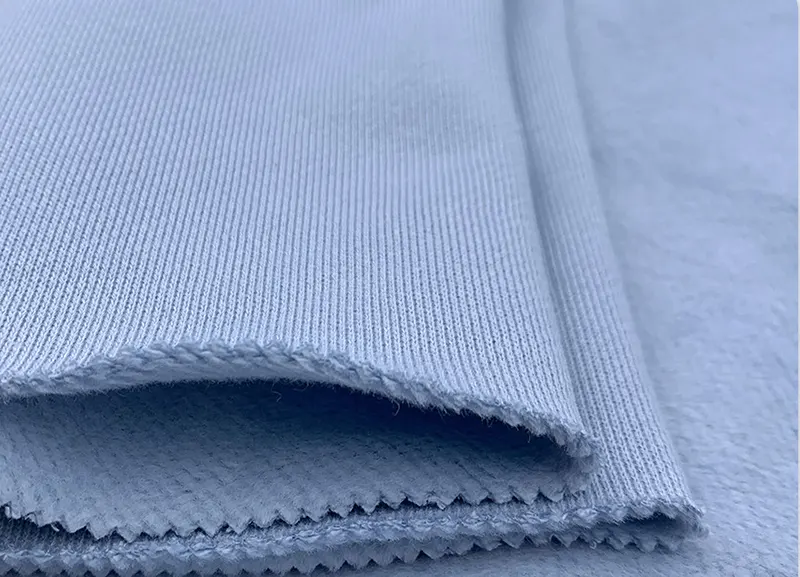
GSM is merely a weight indicator; the fabric’s “construction” determines the diverse experience of fabrics with the same GSM:
Loopback Fleece vs French Terry: At the same GSM, loopback fleece (brushed pile) typically offers greater warmth, while French Terry is lighter, dries faster, and is more suitable for close-fitting styles.
Single-faced vs. Double-faced Fabrics: Double-faced brushed or double-knit fabrics often feel thicker at the same GSM.
Yarn Count and Twist: Lower yarn counts are typically thicker but feel rougher; higher yarn counts offer softer handfeel and a finer appearance.
Blends (CVC, TC) vs. Pure Cotton: Blends often offer better dimensional stability and lower cost at the same GSM, but their breathability and feel differ from pure cotton. Recycled fibers or polyester blends alter moisture absorption and dyeing results.
Three-layer/Sandwich Construction: Examples include two fabric layers sandwiching an insulating core, achieving high warmth at lower surface GSM. However, this significantly increases cost and weight.
Recommended GSM by Style
Basic Pullover: Recommended 260–300 GSM for seasonal versatility and cost efficiency.
Everyday Hoodie: Recommended 280–320 GSM, suitable for most European and American markets.
Heavy Streetwear: Recommended 330–380 GSM for pronounced weight and visual bulk.
Oversized Hoodie: Recommended 340–380 GSM to maintain dropped shoulders and volume.
Zip-Up Styles: Opt for 300–360 GSM when worn as outerwear; choose 240–280 GSM for lightweight active layers.
Premium Limited Editions/Luxury Styles: Consider 400+ GSM or multi-layer construction to enhance texture and handfeel, but ensure pricing aligns with target audience.
The above serves as a starting point; final confirmation requires sample fitting and wash testing.
GSM and Production Costs
Key elements affecting pricing include: yarn cost (cotton/polyester prices), GSM (raw material usage directly impacts fabric cost), dyeing and finishing (darker colors and special finishes incur higher costs), weaving yield rate, MOQ (minimum order quantity), and shipping weight. Specific impacts:
Raw Material Costs: Each 10–20 point increase in GSM directly raises unit fabric cost; e.g., high cotton content and high-count yarns are more expensive.
Dyeing & Finishing Costs: Dark colors or eco-friendly dyes (low water consumption/chrome-free) incur higher costs, while higher GSM fabrics consume more dye during processing.
Sewing Costs: High-GSM fabrics may require heavier sewing equipment or altered stitch spacing, potentially increasing labor expenses.
Scrap Rate & Shrinkage Control: If fabric shrinkage is high, manufacturers may require higher weight allowances or additional post-processing, increasing costs.
Brands are advised to request three key metrics from factories during cost calculations: fabric unit price (per meter or kilogram), garment yield rate, and post-wash shrinkage rate. Incorporate these variables into gross margin tables for sensitivity analysis.
Optimal GSM Recommendations and Technical Guidance for Different Target Users
Quick Recommendations: For emerging brands targeting most European and American markets, 280–320 GSM is the safest starting point; for streetwear/high-end lines, consider 340–420+ GSM.
Sample garment and wash verification: Always prioritize actual sample testing, conducting at least three key assessments: wearability, post-wash shrinkage, and follow-up checks on colorfastness and handfeel.
Technical recommendations for supplier communication:
Target GSM and tolerance (e.g., 320 ± 8 g/m²)
Fiber composition and yarn count (e.g., 100% ring-spun combed cotton, 24s)
Weave structure (French Terry / Brushed Back Loopback)
Finishing requirements (pre-shrinking, softening treatment, pilling resistance)
Sampling and testing methods (sampling locations, testing agencies or standards)
Washing processes (specify if enzyme wash / garment dye / pre-shrunk is required)
Practical recommendation: First develop 1–2 flagship GSM samples (e.g., 300 GSM regular and 360 GSM heavyweight), then conduct market testing and A/B pricing with these two options to quickly identify customer preferences and acceptable cost ranges.