 MHQ Hoodies

The choice of fabric for custom hoodies directly determines the product’s comfort, durability, warmth, and print quality. With the vast array of fabric options available on the market, cotton, polyester, CVC, and fleece are the four most fundamental and frequently mentioned fabric types. To help you make the most informed decision, this article will outline the characteristics of these fabrics from these four perspectives, offering some guidance as you launch your apparel brand business.
Before selecting fabrics, we must first understand their respective “temperaments.” Each fabric possesses unique chemical compositions and textile structures, which determine significant differences in wearing experience and subsequent maintenance.
The four most commonly used classic fabrics
100% cotton
100% cotton fabric, with its natural properties, has consistently been a popular choice in the hoodie market, particularly suited for those seeking a skin-friendly experience and everyday casual wear.
Pros:
Ultimate Skin-Friendliness and Breathability: Cotton fibers are naturally soft and gentle on the skin, with low allergenic properties making them ideal for those with sensitive skin. Their exceptional breathability promotes air circulation, preventing stuffiness.
High Moisture Absorption: Pure cotton can absorb up to 27 times its own weight in moisture, helping regulate body temperature and keeping the wearer dry and comfortable.
High Print Compatibility: Cotton fibers exhibit strong ink absorption, making them ideal for direct-to-garment (DTG) printing. This process produces vibrant, durable patterns.
Cons:
Prone to Shrinkage and Wrinkling: The high moisture absorption of pure cotton also presents drawbacks. It experiences significant shrinkage after the first wash and wrinkles easily with regular wear, resulting in poor shape retention.
Moderate Durability: While sturdy, its elasticity and shape retention capabilities are inferior to synthetic fibers under frequent wear and washing.
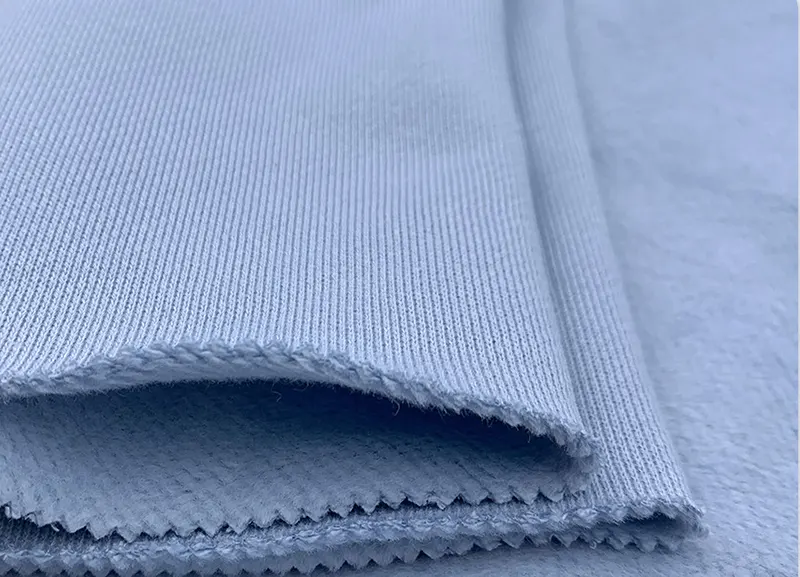
460GSM 100% Cotton Hoodie Fabric
Polyester
Polyester, as a representative synthetic fiber, dominates the athletic hoodie market due to its exceptional functionality.
Pros:
Durable Shape Retention: Polyester boasts excellent wrinkle resistance and abrasion resistance, maintaining its original form even after repeated washing without significant deformation.
Quick-Drying Moisture Management:
Leveraging capillary action, polyester rapidly transports sweat from the skin’s surface to the outer layer of the fabric where it evaporates quickly, keeping the body dry. This makes it highly suitable for outdoor and athletic activities.
Vibrant Color Retention:
Polyester fabric is particularly well-suited for sublimation printing, producing exceptionally vivid and long-lasting patterns without a heavy or stiff feel.
Cons:
Breathability and Static Issues: Compared to natural fibers, polyester offers poorer breathability and tends to generate static electricity, which attracts dust.
Pilling Risk: Fabrics with high polyester content (especially 100% polyester) are prone to pilling after friction, compromising appearance.
Printing Limitations: Direct-to-garment (DTG) printing exhibits poor adhesion on pure polyester, typically requiring specialized sublimation processes.
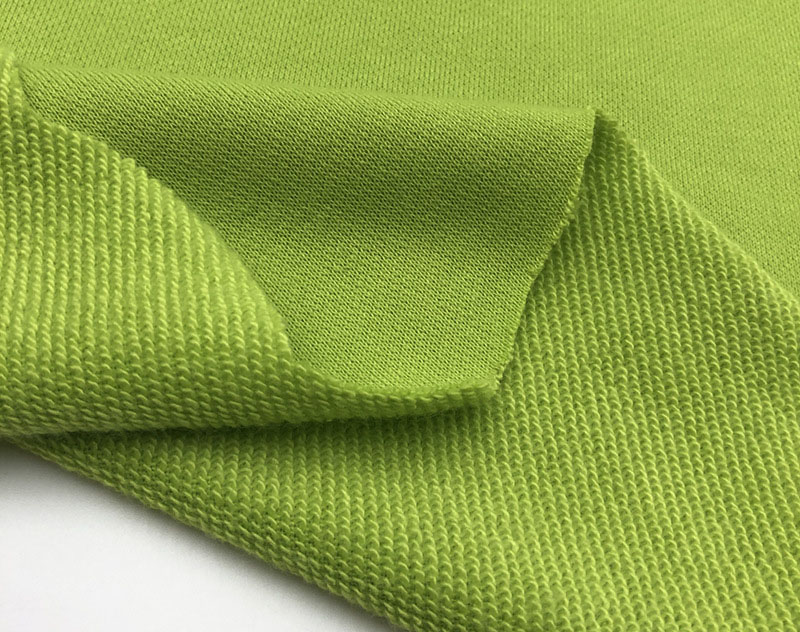
350G 100% polyester terry fabric
CVC
CVC stands for “Chief Value Cotton,” specifically referring to blended fabrics with a higher cotton content than polyester (typically exceeding 60% cotton). It differs from ordinary TC (polyester-rich) fabrics, representing an “upgraded version” within the blended fabric category.
Pros:
Soft Feel: With cotton as the dominant component, CVC inherits the softness and breathability of pure cotton, offering an even more refined texture than standard cotton.
Wrinkle-Resistant and Low-Maintenance: The addition of polyester addresses cotton’s drawbacks, resulting in excellent wrinkle resistance and minimal shrinkage. Garments require little to no ironing after air-drying.
Exceptional Durability: The blended construction enhances the fabric’s strength and abrasion resistance, maintaining its crisp shape even after repeated wear and washing.
Dyeing Effect: Due to the distinct dyeing properties of cotton and polyester, CVC fabric often exhibits a stylish mixed-color effect, creating a visually layered appearance.
Cons:
Prices are typically slightly higher than regular cotton or polyester fabrics;
Certain requirements exist for printing processes (not suitable for sublimation printing).
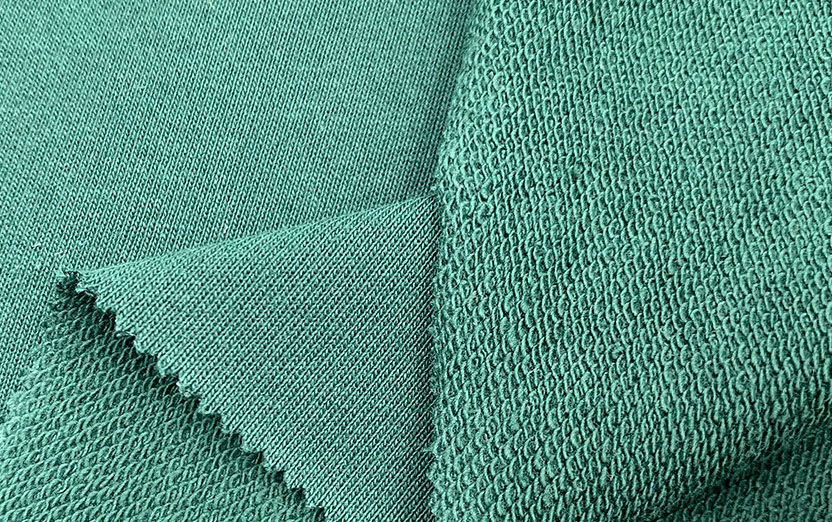
Fleece
Fleece is not a fabric composition but a weaving technique. It typically refers to a knitted fabric with a fluffy pile formed on its inner side through a brushing process, which can be made of cotton, polyester, or a blend.
Pros:
Ultimate Warmth: The fluffy fleece traps large amounts of still air, forming an insulating layer that provides exceptional warmth—making it a must-have for autumn and winter.
Soft and Comfortable: The inner fleece feels soft to the touch, like wrapping yourself in a blanket, delivering unparalleled comfort.
Casual Style: The fleece hoodie naturally exudes a relaxed, laid-back vibe, making it a staple in streetwear and everyday casual fashion.
Cons:
Pilling Prone: Whether polyester or cotton fleece, surface fibers tend to form balls through daily friction.
Heavyweight: Compared to fabrics like French terry, fleece is typically thicker and heavier, making it unsuitable for warmer seasons.
Bulky Silhouette: If poorly tailored, the substantial fleece fabric can easily create a puffy appearance.
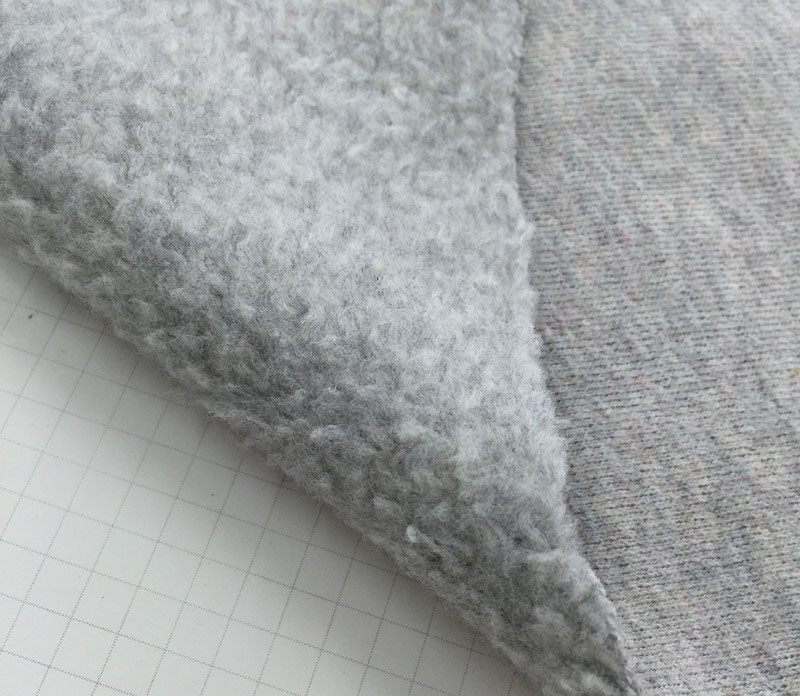
380G Fleece Hoodie Fabric
Which one better suits your customization needs?
Comfort and wearing experience
If you seek the ultimate in skin-friendly breathability, pure cotton is the safest choice. For those seeking a smoother, more luxurious feel without compromising comfort, CVC cotton blends stand out thanks to their high cotton content and the refined texture achieved through blending. Fleece, meanwhile, excels at providing a warm, cozy embrace—sacrificing a bit of flexibility for unparalleled comfort during fall and winter. Polyester ranks lower in this category, primarily due to its inferior breathability and skin-friendly properties compared to natural fibers.
Durability and Ease of Care
For custom garments requiring frequent wear and washing—such as employee uniforms—durability is a core metric. Polyester undoubtedly reigns supreme in this regard, offering wrinkle resistance and abrasion resistance. CVC follows closely behind. It retains the soft feel of cotton while gaining excellent shape retention and shrink resistance from the polyester blend, making daily care remarkably hassle-free. Pure cotton requires the most attention, needing careful handling to prevent shrinkage and regular ironing to remove wrinkles. Fleece, meanwhile, demands vigilance against pilling.
Thermal Performance
Fleece, with its unique physical structure, stands head and shoulders above the rest in warmth retention, making it the only choice for winter customization—such as French terry fleece. CVC and pure cotton fall into the middle tier, offering basic warmth suitable for spring, autumn, or indoor wear. Thin polyester fabric provides the least warmth unless specially treated (e.g., brushed).
Custom Craftsmanship and Printing Effects
This is the most critical step in custom hoodie production.
Pure cotton serves as the ideal substrate for direct-to-garment (DTG) printing and screen printing, delivering durable and crisp designs.
Polyester is perfectly suited for sublimation printing, allowing colors to penetrate the fibers for vibrant, fade-resistant results without any sticky residue.
CVC blends offer good compatibility for both screen printing and DTG printing. However, due to their polyester content, they are unsuitable for sublimation printing, which would result in very dull prints.
Fleece poses challenges for printing due to its fuzzy surface. It is generally better suited for embroidery, as printed designs can become obscured by the pile, leading to unclear patterns.
The Ultimate Buying Guide
After comparing the options above, we can provide the most straightforward fabric recommendations based on different usage scenarios:
Pursuing premium everyday wear and streetwear design
CVC fabric is the top choice. It offers a luxurious soft feel and distinctive heathered appearance, while maintaining its crisp shape and resistance to looking worn even after repeated washing. For users seeking to establish a brand image and prioritize wearing experience, CVC is an exceptionally cost-effective “premium cotton” option.
Corporate Employee Uniforms or Team Activity Apparel
Opt for CVC or premium polyester-cotton blends. These garments require frequent laundering while maintaining a consistent appearance. CVC’s wrinkle resistance, shrinkage prevention, and durability perfectly meet these demands. Employees enjoy comfort, managers benefit from low-maintenance care, and long-term wear resists deformation.
Winter Outdoor Warmth or Cold-Climate Wear
Fleece fabric is the top choice. Whether worn as a base layer or outerwear, fleece’s warmth is unmatched. For high-intensity outdoor activities, polyester fleece offers both quick-drying and insulating properties. For daily commutes, cotton fleece provides a more comfortable, skin-friendly feel.
Basic styles, entry-level customization, or eco-conscious options
Opt for 100% cotton. If you prefer that vintage, rustic feel or require intricate printing, cotton is the straightforward choice. It’s naturally eco-friendly and the most widely available option on the market.
Based on your specific needs, weigh the pros and cons of the above factors, and you’ll surely find the fabric that best suits your requirements.