 MHQ Hoodies

Within the global apparel manufacturing industry, China stands as one of the most significant regions for hoodie production. For brands, entrepreneurs, and buyers, understanding the cost structure of custom hoodies in China is crucial for budget control and setting reasonable retail prices. This article will outline the full production costs of a custom hoodie—from fabric sourcing to factory shipment—based on the latest 2026 market data, while analyzing key factors influencing pricing.
1. Total cost overview of a hoodie
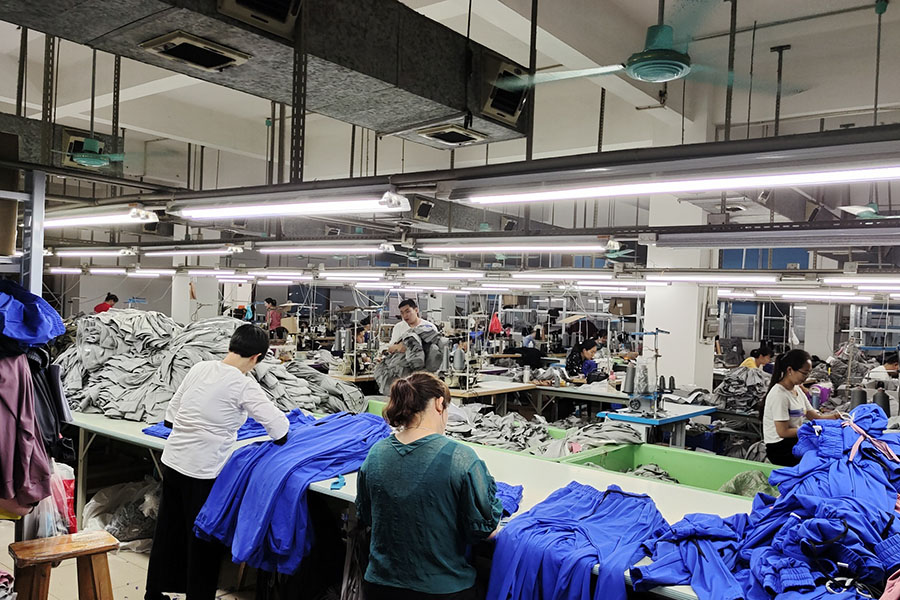
According to 2026 first-tier market data, the factory price per unit for a basic custom hoodie produced in China typically ranges from $8 to $18 (approximately RMB 58 to 130) for bulk orders. This price range covers the entire production process, including fabric, trims, cutting, sewing, and packaging.
However, this is merely a baseline. According to real-time supply data from Alibaba International Station for 2025-2026, cotton hoodies featuring simple customization processes—such as printing or embroidery—typically range in unit price from $9.20 to $19.90, depending on order volume.
The specific price tiers are shown in the table below (using a 400g 100% cotton custom hoodie as an example):
| Order Quantity | Unit Price (USD / pc) | Unit Price (Approx. RMB / pc) |
|---|---|---|
| 50–99 pcs | $19.90 | ¥143 |
| 100–299 pcs | $14.60 | ¥105 |
| 300–499 pcs | $11.40 | ¥82 |
| 500+ pcs | $9.20 – $10.10 | ¥66 – ¥73 |
Note: Actual pricing may vary slightly due to exchange rate fluctuations.
2. Cost Breakdown for Hoodies
To understand the total cost, we need to break down the production cost of a hoodie into four main components: fabric, labor, customization techniques, and auxiliary materials/administrative fees.
Core Cost Breakdown (Based on Bulk Production, MOQ ≥ 300 Pieces)
According to the standard model in the apparel manufacturing industry, the cost breakdown for a standard hoodie is as follows:
Cost Breakdown (Per Piece)
| Cost Component | Cost Range (USD / pc) | Cost Range (Approx. RMB / pc) | Estimated Share | Remarks |
|---|---|---|---|---|
| Fabric | $4.0 – $8.0 | ¥29 – ¥58 | 40% – 50% | Core cost driver; highly affected by GSM and material composition |
| Labor | $2.0 – $4.0 | ¥14 – ¥29 | 20% – 25% | Includes cutting, sewing, finishing, and ironing |
| Cutting / Printing | $1.0 – $3.0 | ¥7 – ¥22 | 10% – 15% | Additional cost for customized processing techniques |
| Accessories / Overhead | $1.0 – $3.0 | ¥7 – ¥22 | 10% – 15% | Includes zippers, drawstrings, labels, packaging, and factory margin |
| Total | $8.0 – $18.0 | ¥58 – ¥130 | 100% | Ex-factory price (FOB), international freight not included |
3. Key Factors Affecting Cost
The above prices are not fixed. The final quotation amount is directly determined by the following four key factors:
3.1 Fabric: The Fundamental Determinant of Cost
Fabric costs typically account for 40%-50% of production expenses, representing the largest expenditure category.
Composition: 100% cotton fabrics generally cost more than polyester blends (e.g., cotton/polyester blends). Costs increase further for organic cotton or functional fabrics (e.g., waterproof, UV-resistant).
Weight: Higher weights (e.g., 400g) yield thicker fabrics requiring more cotton, naturally increasing costs. Common spring/fall weights range from 280-320g, while drop-shoulder heavyweight styles above 400g target the premium segment.
Raw Material Price Fluctuations: In early 2026, market influences led to slight increases in polyester raw materials (e.g., POY at ¥7,150/ton) and pure cotton yarn (carded 32S at ¥21,820/ton), directly impacting greige fabric costs.
3.2 Customization Process: Why is embroidery more expensive than printing?
Customization is the soul of “custom hoodies” and also adds to the cost:
Screen printing: Relatively economical, but plate fees increase with more colors.
Digital Direct-to-Garment Printing: Ideal for intricate designs with no plate fees, but unit cost per piece is higher than screen printing for large orders.
Embroidery: The most premium technique and highest cost option. Adding embroidery or complex graphic customization typically incurs an additional $2 per piece on top of the base price.
3.3 Order quantity significantly impacts pricing.
The minimum order quantity (MOQ) decisively influences the unit price. As shown in the unit price gradient above, the unit cost can drop by over 50% when scaling from 50 to 500 pieces. This reduction stems from the dilution of fixed costs such as pattern-making fees, mold charges, and production line setup expenses. For orders exceeding 500 pieces, factories gain greater bargaining power when sourcing fabrics, enabling them to push unit prices below $10.
3.4 Trims and Accessories
Seemingly insignificant components like drawstrings, zippers, ribbing, and care labels collectively add up to a significant expense. For instance, using custom high-quality metal zippers instead of standard nylon ones can increase the cost per piece by 1-2 RMB. Specialized custom packaging—such as coated OPP bags or bespoke paper boxes—also adds approximately $0.50 per unit.
4. Quotation Comparison for Actual Order Cases
Client Order A: Light Customization Streetwear Brand (100 pieces)
Product Specifications: 100% cotton, 320gsm, chest silk-screen print (single color).
Cost Estimate: Unit price approximately $14.80 – $16.00.
Analysis: Order volume below 300 pieces, ineligible for premium fabric pricing; unit cost falls within mid-to-high range.
Client Order B: Customization Bulk Order (500 pieces)
Product Specifications: Cotton-polyester blend, 280gsm, drop-shoulder style, requires only embroidered brand logo.
Cost Estimate: Unit price approximately $10.20 – $11.60.
Analysis: Large order volume not only reduces the unit price (to around $7) but also effectively dilutes the additional cost per embroidery process.
5. Beyond production costs, what other “hidden” costs exist?
After obtaining the FOB (Free On Board) ex-factory price, you must also factor in the following expenses to calculate the total landed cost:
Domestic Logistics: Transportation from the factory to the port typically incurs low fees but must be accounted for.
International Sea/Air Freight: This constitutes the major expense. For bulky yet lightweight goods like hoodies (bulky cargo), logistics companies calculate “dimensional weight.” Referencing Deppon Logistics’ 2026 standards, the unit rate for light cargo is approximately ¥347 per cubic meter. A packaged hoodie weighs about 1.5kg gross and occupies roughly 0.01 cubic meters. Trans-Pacific freight rates add an average cost of $1 to $3 (approximately RMB 7-22) per item.
Tariffs: Depending on the importing country’s trade policies, import duties typically range from 10% to 20%, plus applicable value-added taxes.
6. Conclusion
In summary, the factory production cost of custom hoodies in China in 2026 will primarily fall within the range of 60 to 140 RMB (approximately $8 to $20). Fabric serves as the foundational cost determinant, while order volume and customization complexity are the key factors influencing pricing.
The core strength of Chinese manufacturing lies in its comprehensive industrial chain—from greige fabrics in Shaoxing’s Keqiao district to accessory markets in Guangzhou and Dongguan, supported by skilled industrial workers. This efficient collaborative network enables China to offer one-stop services ranging from sample-to-production to intricate embroidery while maintaining price competitiveness. For buyers, the optimal cost-control strategy when customizing hoodies in China involves clearly defining their positioning—whether pursuing ultra-affordable mass-market items or niche fashion brands emphasizing craftsmanship—and precisely controlling fabric and production technique selections.