 MHQ Hoodies

Digital printing is an on-demand inkjet printing technology based on digital images. This technology eliminates the need for traditional plate making; instead, computer-controlled printheads spray specialized ink directly onto the fabric, enabling a fully digitalized process from design to production. Its core advantages lie in production flexibility, supporting small-batch, personalized, and rapid-response flexible production models, while also offering eco-friendly characteristics such as water and energy conservation and low pollution emissions. Currently, this technology is widely used in the apparel and home textiles sectors, serving as a key driver for the printing and dyeing industry’s transformation toward digitalization and sustainability.
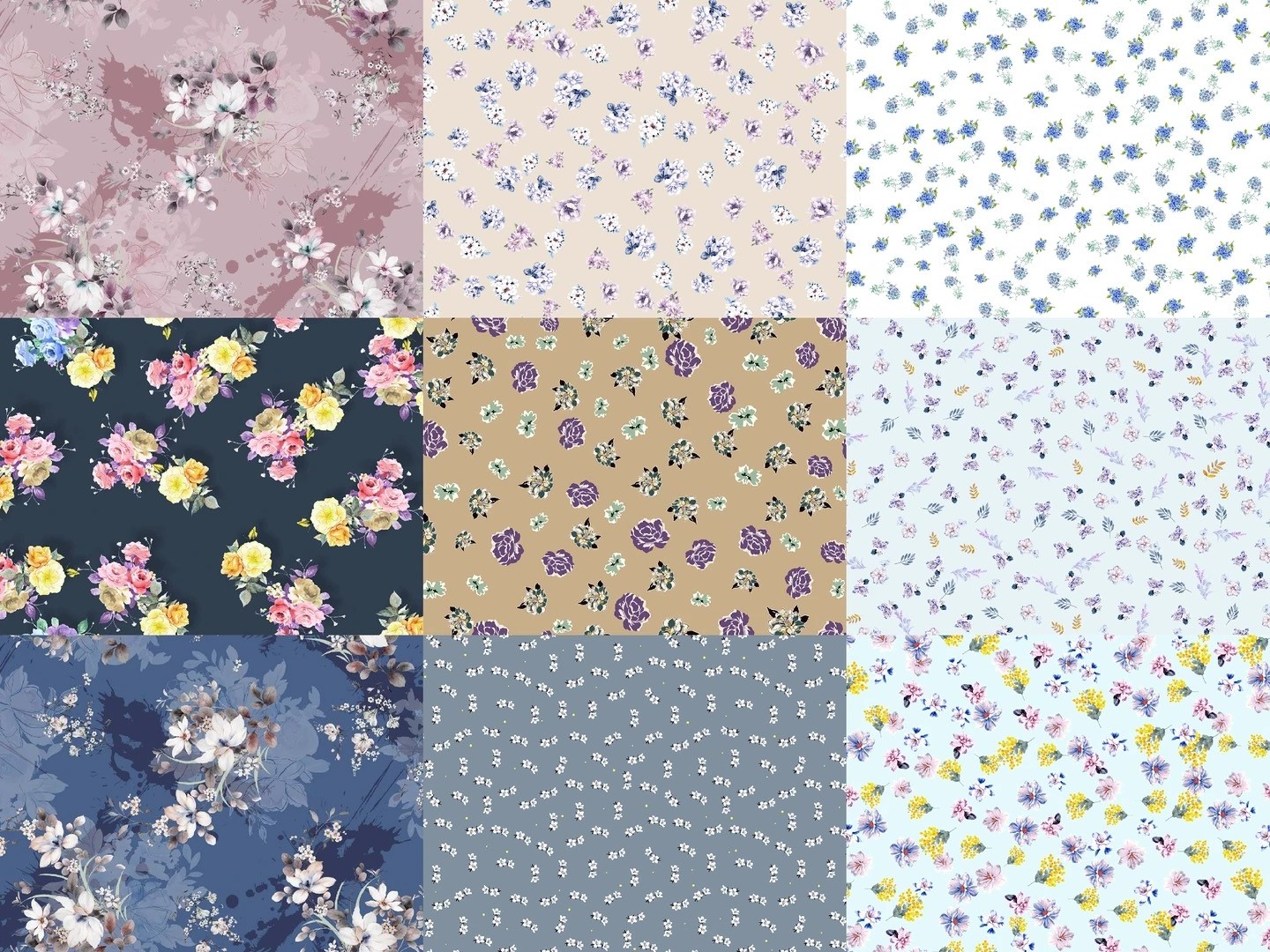
Types of Digital Printing
Digital printing can be broadly classified into five categories based on ink type and the fabrics used: acid digital printing, reactive digital printing, pigment digital printing, disperse heat transfer printing, and disperse direct-to-fabric digital printing. Acid digital printing inks are suitable for fabrics made of protein fibers such as wool and silk, as well as nylon fibers; Reactive digital printing inks are primarily suitable for fabrics such as cotton, linen, viscose, and silk; pigment digital printing inks are suitable for cotton, silk, synthetic, and blended fabrics; disperse heat transfer printing inks are suitable for materials such as polyester, non-woven fabrics, and ceramics; and disperse direct-to-fabric digital printing inks are suitable for polyester fabrics.
Based on equipment and processes, digital printing can be divided into direct digital printing and digital heat transfer printing. Digital direct-to-fabric printing refers to the process of printing the desired pattern directly onto various materials using a digital printer; digital heat transfer printing, on the other hand, requires the pattern to be pre-printed onto special transfer paper, which is then transferred to various materials via heat transfer. In industry statistics, digital direct-to-fabric printing and digital heat transfer printing are the two primary process types.
Based on equipment structure, digital direct double-sided printing equipment can be divided into two major categories: single-pass and two-pass. Single-pass double-sided digital printing machines can print color patterns on both the front and back of the fabric simultaneously; these machines can be further classified into two structural types depending on whether they are equipped with a conveyor belt. Two-pass double-sided digital printing machines, on the other hand, require the fabric to be printed on the front, then flipped over to be printed on the back.
Technical Features
The application of digital printing technology meets market demands for personalization, small batches, and rapid response. This technology enables diverse, three-dimensional, and practical designs, making production methods more flexible, design options more abundant, and applications more personalized, thereby helping to satisfy consumer demand for customized products. Since the entire digital inkjet printing production process is computerized, production flexibility is significantly enhanced, and batch sizes are unrestricted. Some products can even be delivered on the same day, ready for immediate pickup. Additionally, thanks to the application of computer technology, digital inkjet printing offers the technical advantage of producing a series of patterns with the same design but different color tones, as well as allowing designers to make real-time adjustments to patterns and colors during the production process.
Compared to traditional printing processes, digital inkjet printing reduces dye consumption by approximately 20%–40% and water consumption by approximately 40%–60%. Energy consumption per 10,000 yuan of output value in digital printing is only one-tenth that of traditional printing.
Digital printing currently faces challenges such as slower printing speeds compared to traditional methods and higher costs for ink and equipment (particularly printheads). Printing on dark fabrics requires white ink, which presents significant technical challenges; furthermore, the rub fastness and soap wash fastness of digital prints need to be improved.
Advantages of Digital Printing in Production
1. The entire printing process is digitized, enabling the design and production of printed products to not only respond quickly to order demands but also offer a high degree of flexibility, allowing for customized production as needed. For example, if a customer places an order for 10 square meters of decorative fabric, it can be delivered in just 3.5 hours—truly ready for immediate pickup, ensuring customer satisfaction. Traditional printing, on the other hand, involves time-consuming processes such as color separation, screen making, color matching, paste preparation, printing, and post-processing, resulting in high production costs—and the customer may still not be satisfied.
2. Design drafts can be freely modified on a computer, allowing designers to fully and fully express their creative concepts and aesthetic sensibilities. For example: Not long ago, when producing long scarves for display at a university’s art department, the customer was not entirely satisfied with the printed sample. The designer immediately made revisions on the computer. After several rounds of color adjustments and pattern modifications, the client approved the design on the spot, allowing for mass production to proceed. In traditional printing, once a designer’s sample is finalized, it is difficult to make further revisions or modifications. This process lacks flexibility and the ability to respond quickly to market demands regarding patterns, designs, and color combinations.
3. Digital inkjet printing technology uses digitally controlled nozzles to spray tiny droplets of dye onto specific areas as needed. These countless micro-droplets rapidly form the desired pattern, achieving visually consistent color and lifelike patterns. Traditional printing methods generally perform poorly in terms of color saturation and the clarity of tonal gradations, and it is also difficult to achieve smooth transitions in patterns such as cloud motifs.
4. Due to the high printing precision of digital printing machines, there are virtually no issues with pattern registration or color registration accuracy. Regardless of the pattern type or the number of colors involved, the entire process is completed using direct printing methods. This eliminates the pollution from large amounts of reducing agents and the waste of dye associated with the “reverse printing” process in traditional methods, while also ensuring vibrant color tones and colorfastness.
5. During the digital inkjet printing process, the computer automatically stores color data. In mass production, the color data remains constant, ensuring consistency between small and large-scale prints.
6. The digital printing process eliminates the concept of “pattern repeats,” allowing designers to fully realize their creative vision without being constrained by repeat patterns, thereby laying the foundation for designing more aesthetically pleasing patterns. In actual production, patterns with a repeat length of up to 15 meters have been printed.
7. High printing precision (registration accuracy and repeat accuracy < ±0.1 mm) allows for photo-quality printing on fabric that is virtually on par with offset printing.
8. For small-batch production (under 200 meters), digital inkjet printing is more cost-effective than traditional printing methods. This lays a solid foundation for meeting the market demand for diverse product varieties and small batch sizes.
9. Process Archive Storage: All data and process specifications required for the digital printing process are stored on a computer, ensuring reproducibility of the prints.
10. Digital printing is an eco-friendly production method. The printing process requires no water, no mixing of color pastes, and produces no waste dye solutions or color pastes, with low noise levels (<58 decibels).
Digital Printing Equipment and Consumables
Digital printing technology relies on specific hardware and supporting consumables, primarily including digital printing machines, core printing components, specialized inks, and auxiliary systems.
Core Equipment
The core equipment for digital inkjet printing is the digital printing machine. Based on printhead technology and application scenarios, these are primarily divided into three categories: First, flatbed printers modified from Epson desktop models, such as the modified Epson T50 flatbed printer, which is mainly used for small-format pigment ink printing; Second, printers equipped with Epson DX4/DX5/DX6/DX7 series inkjet printheads, such as the MIMAKI JV3-160 and MUTOH 1604; Third, high-speed industrial digital printing machines using industrial printheads from Kyocera, Seiko SPT, Konica, SPECTRA, and others. The purchase and operating costs for this type of equipment are generally higher. A representative company is Hangzhou Honghua Digital Technology Co., Ltd., whose direct-to-fabric printers achieve a print resolution of up to 1200 dpi and a speed of up to 1000 m²/hour. Single-pass and two-pass are the two primary structural designs for double-sided digital printing machines.
Key Components
The inkjet printhead is the core component of a digital printing machine, and its performance directly affects print accuracy and speed. Currently, piezoelectric printheads are the mainstream choice. Printheads are expensive and represent one of the major costs of the equipment. They require regular maintenance and care; minor clogs can be addressed using the machine’s built-in ink-flushing function, while severe clogs require soaking and cleaning. Anti-static precautions must be taken during printhead installation, and using high-quality, genuine ink helps extend printhead lifespan.
Major Consumables
Digital printing ink is a critical consumable, primarily categorized into dye-based and pigment-based inks. Dye-based inks include acid, reactive, and disperse inks; pigment-based inks are mainly pigment inks. Inks must be precisely matched to the fabric type and printhead. The development of white ink remains a technical challenge, with the industry currently relying heavily on imports, which limits its application on dark-colored fabrics. Domestic companies such as Zhengzhou Hongsheng Digital Technology Co., Ltd. and Sencolor Nano are also developing high-quality inks. Sencolor Nano has achieved manufacturing technology for 50-nanometer water-based inkjet particles, improving print smoothness.
Supporting Systems
A complete digital printing system also includes several supporting systems to ensure stable operation. The ink supply system ensures a continuous and stable ink supply over extended periods, eliminating the need for frequent cartridge replacement. The fabric guide system keeps the fabric flat and prevents misalignment during printing. [9] The drying system rapidly cures the ink; high-speed equipment often integrates drying units directly into the production line. Additionally, the system includes supporting equipment for pre-treatment processes such as sizing and post-treatment processes such as steaming and washing.
Key Digital Textile Printing Tips for Real Production
To achieve high-quality results in digital textile printing, there are five critical steps—from design to finished product—that require special attention. Below are guidelines proven effective through practical production experience:
Design and File Preparation
Color deviation is the most common issue in printing, stemming from the difference in color rendering between computer screens and printed fabric. The most critical consideration is to standardize color specifications: All designs and prototypes must adhere to Pantone color codes to avoid subjective descriptions. Design files must use the CMYK color mode exclusively, not RGB. Monitors must be color-calibrated; both designers and production staff should use professional colorimeters (such as X-Rite or Datacolor) to calibrate their monitors regularly, preventing misjudgments caused by screen discrepancies. Before printing, perform a “soft proof” in the design software using the printer’s ICC profile to simulate the final color effect and identify potential issues in advance. Always produce a sample before mass production; no matter how urgent the order, a sample must be produced to confirm the color. This is the best way to “spend a little to save a lot,” effectively preventing customer rejections caused by color discrepancies in the final batch.
Fabric Selection and Pre-Treatment
The inherent properties of the fabric and the results of pre-treatment directly affect ink adhesion, color rendering, and color fastness.
Fabric batches must be consistent; whenever possible, use fabric from the same batch for mass production. Differences in raw materials, weaving, whiteness, moisture content, and sizing uniformity between batches can lead to significant color discrepancies. Dark or black fabrics must be primed with white ink before printing to provide an even base for colored inks and ensure vivid pattern reproduction. Fabric cleaning and pretreatment are essential, as dust, grease, and fabric softener residues on garments can severely impair ink adhesion. Prior to printing, fabrics must be washed, degreased, and de-fuzzed, followed by uniform application of the pretreatment solution. The pretreatment solution fixes the ink, seals fiber pores to prevent bleeding, and enhances color vibrancy and fastness; it is an essential step for high-quality direct-to-fabric printing. For polyester fabrics, if used for spandex polyester or requiring high migration resistance (to prevent dye migration and color transfer), switch to a disperse direct-to-fabric printing process and use a dedicated pretreatment solution.
Print Process Control
During printing, equipment condition, ink quality, and environmental conditions all affect the final result. It is best to establish a closed-loop color management system and create an independent ICC profile for each “printer + ink + fabric” combination. Equipment should be calibrated every 3–6 months, and ink brand and batch consistency must be ensured. Temperature and humidity must be controlled; production workshops should be maintained at 20–25°C and 40%–60% RH. Excessively dry conditions can cause static electricity to interfere with ink droplets, while excessive humidity or high temperatures can affect ink viscosity and ejection volume. When printing on both sides or on thick fabrics, the total ink volume should not be too high; otherwise, excessive ink penetration may cause blurred pattern edges and thickening of fine lines. Knit fabrics are highly elastic, so care must be taken to reduce tension to prevent pattern distortion during printing. Fabric fuzz is a particularly prominent issue, so the fuzz removal process during pretreatment requires special attention.