 MHQ Hoodies

The Production Process of Puff-Print Clothing
Overview
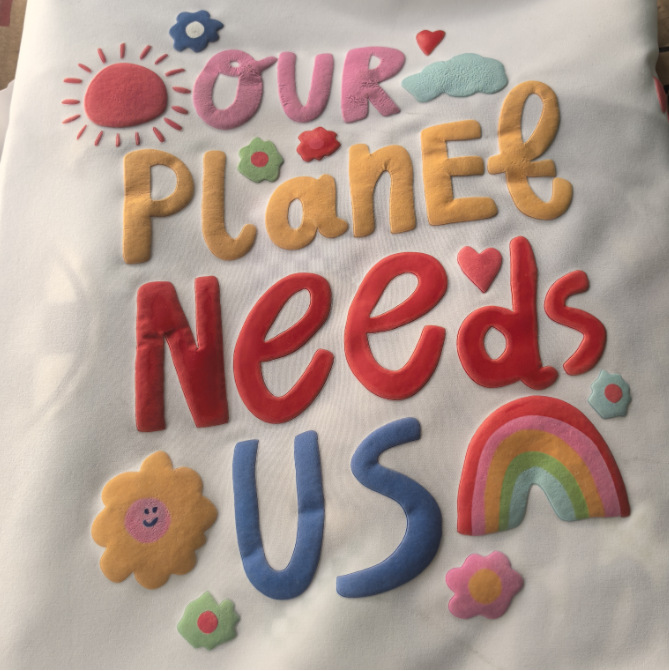
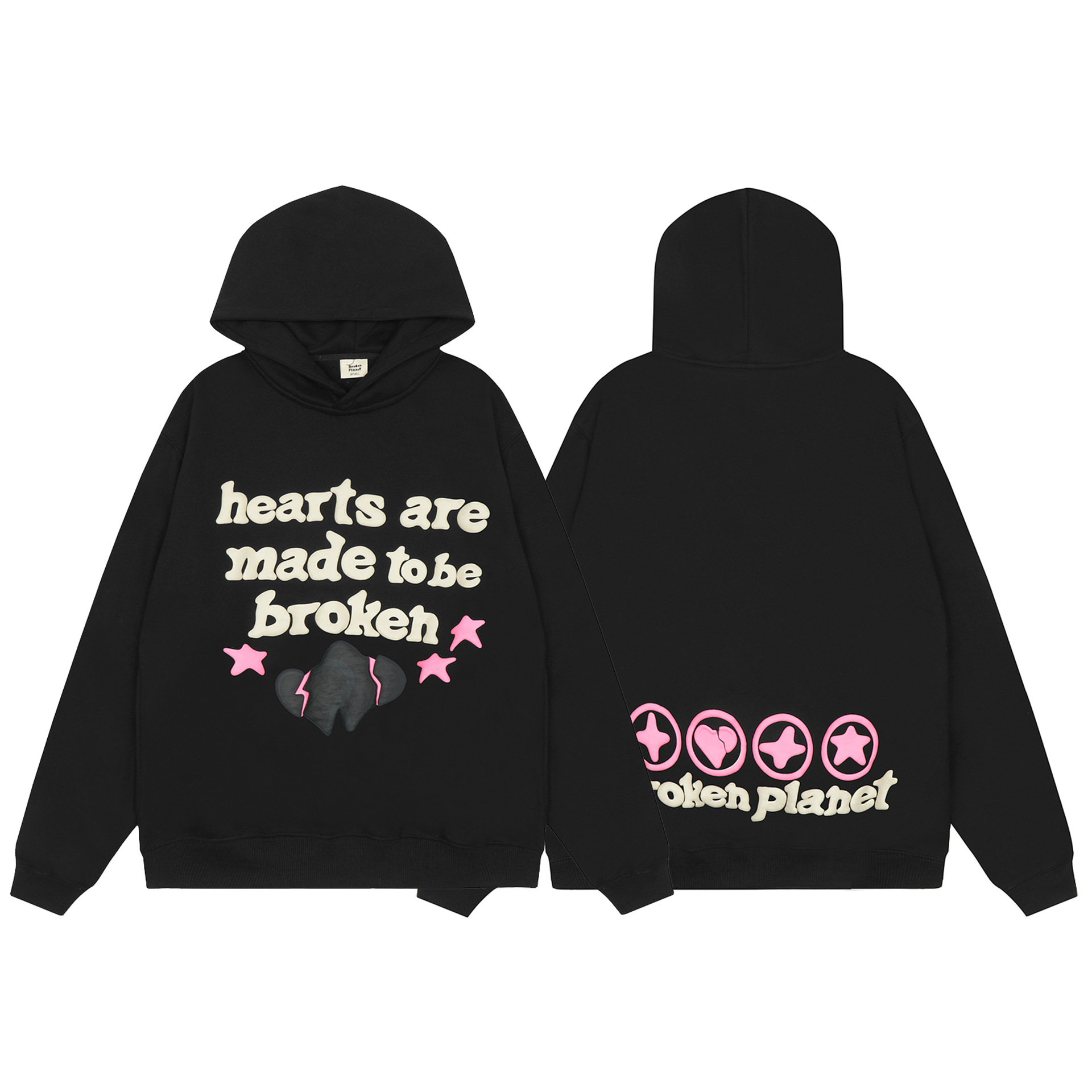
Puff printing, also known as 3D puff print or raised printing, is a specialty printing technique that creates a three-dimensional embossed effect through heat expansion. The process works by adding a high-expansion foaming agent into the printing paste or ink. Under heat and pressure, the printed pattern expands and rises, producing a soft, textured, and dimensional surface. Puff printing is widely used on cotton, nylon, and various textile materials, delivering both visual depth and a smooth hand feel.
One of the key advantages of puff printing is its versatility. The technique is not limited by fiber type, fabric structure, or printing equipment. It can be applied not only to apparel fabrics, but also to textile decoration products, book covers, Braille publications, decorative wallpapers, packaging materials, and more.
Puff printing can generally be divided into two categories: physical foaming and chemical foaming. Physical foaming relies on microcapsule-based compounds that expand when heated, creating a raised surface texture. Chemical foaming occurs when thermoplastic resins react with blowing agents under heat, generating gas bubbles within the print layer. The production process typically includes screen preparation, low-temperature drying, and heat pressing. Processing temperatures are usually controlled between 115–140°C, while foaming temperatures may reach 145–150°C. Core raw materials commonly include PVC resin and azodicarbonamide blowing agents. By adjusting the ratio of foaming agents, manufacturers can achieve different levels of dimensional effect suitable for garments, socks, and localized decorative applications.
Inks and Production Process
Puff Printing Ink
Puff printing ink achieves its raised effect through the vaporization of foaming agents. The ink is typically formulated by dissolving a blowing agent into liquid PVC resin. When exposed to heat, the foaming agent decomposes and releases gas, forming countless microscopic air pockets within the ink layer, causing the printed design to expand and rise.
Typical Puff Ink Formula
PVC resin — 100 kg, Calcium carbonate — 45 kg, Dioctyl phthalate (DOP) — 90 kg, Dibasic aluminum phosphite — 5 kg, Azodicarbonamide — 5 kg,Pigments — appropriate quantity.
The raw materials are thoroughly ground into a paste-like resin mixture and diluted with suitable solvents before use.
Material Functions
PVC Resin
PVC resin is produced by polymerizing vinyl chloride into a paste resin through emulsion polymerization. In puff printing ink, it serves as the primary binder.
Calcium Carbonate
Calcium carbonate is a white crystalline powder used as a filler material in puff printing ink formulations.
Dioctyl Phthalate (DOP)
DOP is a colorless transparent oily liquid used as a plasticizer. It provides excellent cold resistance and low volatility while improving the flexibility and flowability of PVC resin during processing.
Dibasic Aluminum Phosphite
This material acts as a stabilizer. PVC resin gradually decomposes under prolonged high heat, releasing hydrogen chloride gas that accelerates further degradation. Stabilizers absorb the released gas and help prevent resin decomposition.
Azodicarbonamide
Azodicarbonamide is a lemon-yellow crystalline compound widely used as a blowing agent. Its decomposition temperature ranges from approximately 195–210°C in air and 155–210°C in plastics. During decomposition, it releases nitrogen gas and forms solid byproducts such as biurea. Although insoluble in most solvents and plasticizers, it disperses easily within polymer systems.
Pigments
Pigments provide coloration for puff printing ink. Common pigments include titanium blue, chrome yellow, carbon black, titanium dioxide, magenta, and phthalocyanine blue. Pigments must be finely ground, mixed, and filtered before incorporation into the binder system.
Puff Printing Equipment
Puff printing primarily requires screen printing equipment and heat-curing or heat-press equipment.
Screen Printing Equipment
Standard screen printing machines can be used for puff printing. Specialized puff printing presses are generally not required.
Drying Equipment
After printing, proper drying is extremely important. Small textile pieces can be air-dried on multi-layer racks, while larger pieces may be hung naturally. To maintain print quality, fabrics should not be exposed to high-temperature baking immediately after printing. Low-temperature drying below 70°C or room-temperature ventilation drying is recommended. In many cases, forced-air drying at ambient temperature is sufficient.
Heat Pressing Equipment
The most critical stage in puff printing is heat pressing. Heat presses typically consist of an electrically heated platform and a pressure-contact platform with adjustable temperature and timing controls.
Typical specifications include
Temperature range: 50–300°C, Time control: 0–60 seconds , Pressing area: 26 cm × 38 cm, Operating voltage: 100/110V, Power consumption: 1 kW.
For large-scale production, semi-automatic heat press systems equipped with conveyors, pneumatic cylinders, cooling tables, and control systems are often used. Simple puff effects can even be achieved using industrial hot-air blowers.
Fabric Puff Printing Process
Production Workflow
Design → Artwork Preparation → Screen Making → Ink Mixing → Fabric Processing / Cutting / Additional Printing → Puff Screen Printing → Low-Temperature Drying → Heat Expansion (Heat Pressing) → Inspection → Sewing → Finished Product
Process Parameters
Screen Mesh Count
80–120 mesh.
Low-Temperature Drying
After printing, fabrics are generally air-dried at room temperature (approximately 25°C) for 3–4 hours until fully dry. If oven drying is used, temperatures should remain below 70°C.
Heat Press Foaming Temperature
Typically 115–125°C, depending on the puff paste formulation and contact surface.
Heat Press Time
Usually controlled between 2–15 seconds depending on fabric type, pattern complexity, and desired puff height.
Heat Press Surface
The heated platen usually contacts the reverse side of the fabric, allowing the puff effect to expand more softly and evenly.
Pressure
Pressure is generally close to normal atmospheric pressure.
Cooling
Once sufficient expansion is achieved, extensive cooling time is unnecessary.
Factors Affecting Puff Printing Quality
Achieving both strong visual appeal and practical durability in puff printing depends on several factors beyond artwork design alone. Operator experience, printing techniques, raw material quality, formulation ratios, drying conditions, and heat-press settings all play critical roles in final print performance.
Applications
Puff printing is highly adaptable and is not restricted by fiber type, fabric construction, or printing machinery. It is widely used for apparel fabrics and decorative textile products.
Applications include:
T-shirts, Hoodies, Promotional shirts, Team uniforms, Socks, Tablecloths, Book covers, Braille publications, Decorative wallpaper, Packaging materials, Flags, Tourist souvenirs
In apparel printing, puff printing is commonly used on T-shirts, hoodies, shirts, jackets, varsity jackets, promotional garments, workwear, event merchandise, and children’s apparel. The raised effect is especially suitable for cartoon graphics, brand logos, streetwear typography, and bold block-style designs. Designers should maintain sufficient spacing between graphic elements and avoid overly fine text or photo-realistic imagery.
For decorative textile products, puff printing can create durable, vivid, embossed surfaces for book covers and wallpaper. In Braille printing, it enables lighter-weight tactile publications. It is also used in packaging materials and PVC decorative flooring or wall panels that require wear resistance, pressure resistance, water resistance, and vibrant coloration.
Puff printing can also be combined with other decoration methods such as heat transfers, embroidery, and foil printing to create richer visual effects. The technology offers strong dimensionality, soft touch, wash durability, abrasion resistance, and broad material compatibility.
Impact and Advantages
Puff printing offers several major benefits:
Strong three-dimensional appearance, Soft hand feel, Bright colors, Good wash resistance, Excellent abrasion resistance, Wide application range.
However, the process also has limitations. Puff prints are generally less breathable, unsuitable for highly intricate details, and sensitive to excessive heat exposure. Dense or overly fine designs should be avoided during artwork preparation.
As an environmentally friendlier decoration technology, puff printing can help reduce energy consumption, improve manufacturing efficiency, and lower wastewater emissions compared to some traditional processes. The technique enhances the artistic value and perceived quality of textiles, making it especially popular in casual apparel such as T-shirts and hoodies.
Garment Puff Printing
Garment puff printing is often referred to as 3D puff printing because the finished effect closely resembles flocking or embroidery with a distinctive raised texture. The prints typically offer excellent elasticity and a soft hand feel, making the technique highly popular for apparel decoration, sock printing, tablecloth printing, and cut-panel textile applications.
Main Raw Materials
The primary raw materials for garment puff printing include: Thermoplastic resins, Blowing agents, Pigments and colorants.
In apparel and sock printing, the puff effect is generally created through physical foaming. When microcapsule resins mixed into the printing paste are exposed to heat, the resin solvents vaporize into gas, forming bubbles that expand the print volume and create the raised effect characteristic of puff printing.
Puff Print Design Guidelines
Suitable Applications
Puff printing works particularly well on socks and garment panels. It can also be combined with flat prints to create layered graphic compositions. Designers often use puff effects to highlight outlines or emphasize key areas within standard prints, creating an embossed appearance.
Large Garment Graphics
On garment panels, puff print designs can occupy relatively large areas without strict limitations on size or color intensity. Entire graphics may be printed using puff effects, especially for cartoon designs, children’s apparel graphics, and advertising logos.
Fabric Print Considerations
For all-over printed fabrics, puff graphics are generally more effective when used as smaller scattered elements that imitate the appearance of embroidery. Excessively large puff areas may negatively affect fabric hand feel, while very small areas may not foam properly. Light or medium colors are typically preferred over dark shades.
Multi-Color Printing Sequence
When multiple colors are printed together, puff ink should generally be printed last to avoid affecting expansion performance. Cool printing platens are also recommended to prevent screen clogging and premature foaming.
Advanced Puff Printing Effects
Although puff printing has existed for many years, continuous textile innovation has greatly expanded its capabilities. Beyond traditional white and colored puff effects, the industry has developed pearlized puff printing, metallic gold puff printing, and metallic silver puff printing technologies. These finishes combine the bold dimensional structure of puff prints with luxurious reflective aesthetics similar to pearls or precious metals.
Puff Printing Production Sequence
Puff screen printing → Low-temperature drying → Air drying → Heat expansion (heat pressing) → Inspection → Finished product.
Heat Press Conditions:
Temperature: typically 115–140°C;
Time: approximately 8–15 seconds;
Actual conditions may vary depending on puff paste formulation and heat press pressure.
Important Production Notes
After puff paste has been screen printed onto the printing table, it should never be exposed to prolonged high-temperature baking before expansion. Premature heating can cause uneven foaming defects.
During drying, temperatures should generally remain below 70°C, and dryers should not remain focused on a single printed area for extended periods.
The ratio of blowing agents within the puff paste should always be tested through sampling based on the material supplier’s specifications. Higher puff effects require increased foaming agent content, while lower puff effects require reduced amounts. In practice, achieving optimal results depends heavily on operator experience and technical expertise.